Wednesday, March 28, 2012

Second Base: Diversity, Competence, Disparities


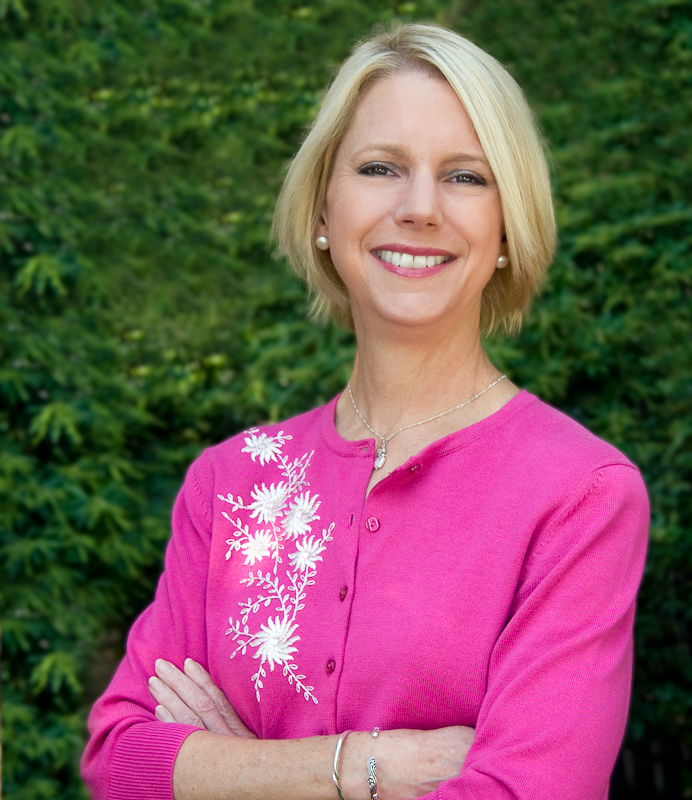
This is the second article in a series about  subjects which have been on the collective minds of the Office of the Provost, the leadership and Board, and the community at large:  active learning, diversity, interprofessionalism.   Thanks toDr. Lynn Foord for her contribution from last month regarding active learning.  I have chosen to steal back the blog for this edition and to focus on the issue of diversity and health disparities. Alex Johnson

The Institute is in need of diversity that reflects the perspectives of the communities we serve.  Diverse students and faculty bring their unique and relevant experience to the forefront of our minds.   From dealing with individuals whose experience is different than our own we learn to listen openly, we learn to think in a non-judgmental manner, and we learn empathy.     More important, we also learn to be understood and misunderstood and how to explain ideas, diagnoses, and recommendations in a manner that is respectful and helpful.   We learn to clarify and explain with an eye toward the needs of another person or group of people.

1.  A Diverse Community Builds a Narrative
When we speak about diversity, do certain images come to your mind?  When I hear the term “diversity” images of race and language jump into my consciousness.   I work to stretch to think of diversity to include every aspect of our community and the unique cultural, social, linguistic features that are associated with the experience of another person.    Thus, a “perfect Institute” would be open to people from various social strata.   We would have strong representation from those communities that are highly underrepresented in the professions of nursing, physical therapy, and speech-language pathology.   The male voice would be more present and visible among faculty and students.   We would continue to expand discussion and provide positive visibility for LGBT students.   We also would welcome and honor every religious and political persuasion.   But assuring balanced representation by these labeled categories does not lead to cultural competence; rather this balance is just the first step.   Assuring a very heterogeneous student body and faculty insures that a voice will be present to tell important cultural and social stories that are critical to the health of the community.

2. Professional Competence Always Includes Cultural Competence.
Cultural competence goes far beyond consideration of labels.  In fact, labeling itself develops a form of bias and judgment.  What will it take for us to think of each person as a potential-filled opportunity for health and success?    What will it take for us to see communities and cultural groups as opportunities for learning, exchange, and health?  In our own work at the Institute, we often use examples of skin color, accent, or attitude as examples of why we need to be culturally competent in our service delivery.    Can I assess the skin integrity of an individual with brown or black skin?  Can I assess the communication abilities of someone who uses English as a second language (or not at all)?    Do I understand the attitudes about health and family in people from another country than my own?    These represent some fundamental examples of thinking with competence about our clients/patients.   They underestimate, however, the depth and importance of the need.    These most obvious examples are trite and are overused.  By working with our patients to understand their social, cultural, language, or religious values and uniqueness, we can come to see the complexities of their illness or disability in a new light.   When we make appropriate decisions based on these complexities and realities, as well as the reality of the patient’s condition, then we are competent.    Cultural competence IS competence

3.  Health Care Disparities Need our Immediate Attention
And what about health disparities?   It is well known that certain groups and populations have received less comprehensive service than others in the health system.   Many of our faculty members, experienced health professionals, have worked in community health centers or urban hospitals where care is rationed quite differently than in more economically advantaged settings.   We know that our country has a huge population of underinsured individuals.    I recently spoke with a friend, who has been unemployed for some time.  She has been paying her own insurance rates for her family----over $800 per month.  For this, she receives comprehensive coverage with an annual $10,000 deductible.    So, if she spends $10,000 in total for prescriptions, office visits, hospital or emergency admissions then she can be reimbursed for her care.    On the other hand, most of us with “good” insurance are paying far less for insurance because our employer purchases our insurance.  We might pay $10-20 for a co-pay for our prescriptions and visits.  All major medical tests and procedures are covered.  This is the best example that I can think of for a disparity.    By virtue of where I work I am advantaged in my health care.   I (and most of you) don’t have to make the difficult decision to choose between care and other “luxuries.”   Disparities extend far beyond these economic situations.    We also know that providers make unconscious decisions based on race, gender, sexual identity, age, and so forth.   Disparity needs to be addressed at a personal (reduce the bias),  policy (create equal access to care), and advocacy (educating the public and those who govern) level.    Our students need the expertise (competence) to address these disparities at each of these levels.

In conclusion, diversity is desirable for the Institute because it advantages our thinking, our experience,  and our understanding of each other.    Cultural competence, one feature of excellent professional skill and knowledge, is a goal for everyone in the IHP community-faculty and students.   Awareness of disparity and the mechanisms that cause it are critical to effective delivery of health and rehabilitative services for the future.  We need to prepare leaders in reducing these disparities.  

Wednesday, March 7, 2012

First Base: Active Learning by Lynn Foord, PhD


Note:  This is the first in a series of follow-up comments to last month's blog (Looking for the Institute's Triple Play: Get your Eye On the Ball).  I asked our new Director of the Prerequisites Program, Dr. Lynne Foord, to give some thoughts about Active Learning and its role at the Institute.  Read on and you will  know a bit more about active learning and its importance as one of the many dimensions for teaching and learning at the IHP!  Alex Johnson, Provost

Lynn Foord, Ph.D.
Many instructors of late have begun to consider transitioning all or part of their class time to active learning . There are lots of interpretations of active learning; all value some means of putting the learner in charge of his/her learning. Unfortunately, some interpret this to mean that faculty then simply provide or refer to resources and step away. In actuality, the instructor never steps away, only steps into a role larger than that of repository of information (“Sage on the Stage”) to apply her/his expertise and experience to the design of learning experiences for the students (“Guide on the Side”).

What will transition to active learning mean in practice?

Richard Thornburg (1996) in Campfires in Cyperspace proposes that we can think of learning happening through a combination of four different environments. The Campfire is the one-way delivery of information from a respected sage. The Watering Hole refers to the informal peer discussions that happen outside of the Campfire (or classroom). The Cave refers to the time when we reflect about what we have learned. Life is, well, life—when we apply what we know in actual practice.

This model seems ideal for health professions education. We all know that our students need access to the essential foundational information found in texts and articles and at Campfires. Equally they need to be able to learn from interactions in the health care community with peers, patients, families. And throughout they need to be able to think critically about their options and choices to be able to apply their knowledge and skills in uncertain, complex clinical situations.

Innovation is at the core of the IHP Strategy Map. Innovators don’t start from scratch; rather, innovators look between the past, the present and the future and develop new ways to use familiar resources. So how can we use our current resources in designing learning experiences that will successfully prepare our students not only to perform well in their academic and clinical education, but to continue to learn and grow throughout their professional practice?

I keep coming back to Thornburg’s model. Our faculty bring expertise, knowledge and wisdom to their courses—we need to be sure that they are available for Campfires at the right time in each course.

But let’s not stop there—let’s free up the faculty to also allow them to create Watering Holes where they can share their expertise in learning activities in which students to engage actively with the material. Some obvious examples of Watering Holes are discussions, “think-pair-share” activities, role plays, debates, case analyses, and simulations.

Consider also how we can encourage our students to use Cave Time to critically reflect upon what they have learned and visualize what they can do with their knowledge and skills? At a recent symposium on teaching at Harvard, the speakers talked about “Flipping the Classroom” presenting a challenging, authentic problem to students for critical reflection. Class time then is constructed to do what used to be homework: to explore, examine, consider the problem in authentic ways (“how would you use this in the clinic?”)by interacting with other students, and with guidance from the instructor who shares his/her experience and expertise.

The transition to active learning involves doing what we are already doing—just differently. We are fortunate here to have resources as we make the transition: Instructional Designers, our Librarian; our colleagues who have taught in 2CC, in the simulation labs, in small groups and in large classes.

We are, after all, learners as well as instructors ourselves. If we practice active learning in all of Thornburg’s environments, we can bring those experiences as well as our clinical experiences, expertise, and judgment to our students.
_________________

Berret, D. (2012) How Flipping the Classroom can improve the traditional lecture.  The Chronicle of Higher Education http://chronicle.com/article/How-Flipping-the-Classroom/130857/ Accessed March 7, 2012Lambert, C. (2012) Twilight of the Lecture.  Harvard Magazine http://harvardmagazine.com/2012/03/twilight-of-the-lecture  Accessed March 7, 2012
Thornburg, D. (1996) Campfires in Cyberspace. San Carlos, CA. Starsong Publications.
 

Wednesday, February 22, 2012

Looking for the Institute's First Triple Play: Get Your Eye on the Ball!


The Boston Red Sox are in Florida for their spring training.  They are making preparations for the 100 year anniversary of their home,  Fenway Park.     While they are focusing on this important celebration, we all know that their “eye is on the ball.”  They are looking ahead to doing everything that they can to win the upcoming season.     Attention to the birthday event inspires and brings attention to their story.   Simultaneous attention to the coming baseball season is what it’s all about.  The history, the party, and the story of what has come before inspire the next step.   This history lifts up the season!

This Red Sox story is a model for where we, the MGH Institute of Health Professions, are headed.  This year, 2012, is the 35th anniversary of the Institute!  During the fall term we will celebrate this important birthday for the IHP!   At the same time three important themes are emerging as being distinctive and important areas of focus for our future.    These include Interprofessional Activity and Competence, Inclusive Excellence and Multicultural Competence, and Active Learning as foundational to entry level education.      In the coming weeks, this blog will focus on each of these themes in more detail.   

Interprofessional Teaching and Learning: Interprofessionalism  has a long history at the Institute.   When our founders described the Institute in their original planning, it was this concept of health professionals working together that was at the forefront of their thinking.  As the Institute changed locations (four times?), grew in size from a few students to now almost 1200, and added and subtracted programs of study it was this interprofessional concept that has been central to the thinking.     In the 1970s and 1980s, there was not much national attention on health professional education and so the Institute was one of the few organizations with a deliberate commitment to the topic of interprofessional studies.    Today, we have a new Center for Interprofessional Studies and Innovation that will soon be the home for two new interprofessional academic degree programs and also for our prerequisite courses.  We have launched, with our partners at Mass General, a new interprofessional dedicated education unit, where a small number of our entry level students from all of our disciplines learn together and from each other.   We are beginning to plan for a new multidisciplinary community focused clinical model.   These “real world” opportunities are reinforced by the monthly Schwartz Rounds, the annual Interdisciplinary lecture,  common coursework in ethics, and our new “Changing Courses II” teaching fellowship.  

Inclusive Excellence and Multicultural Competence:    Inclusion of historically underrepresented groups  in the health disciplines and competence in delivering care to everyone continues to be a major national, local, and Institute theme.   Our disciplines continue to have broad underrepresentation by ethnic, racial, and linguistic minorities.   Health disparities are well documented in the way that the poor and certain minority groups benefit from the health system.   Issues of mistrust, under-and over-diagnosis of health problems,  low health literacy, and access based on social and economic status  continue to reduce quality and outcomes,  drive cost to an unaffordable level, and also to drive critically important moral and ethical questions.     The Institute’s Diversity Committee led by President Bellack,  has developed a model of inclusive excellence and a set of expectations regarding our progress in welcoming a diverse group of faculty members, students, and staff.    Equally important, the committee has  provided guidance regarding the competencies that are expected from every IHP graduate!     

Active Learning and Entry Level Education:  Development of critical thinking, problem-solving, case studies, critical observation, and reflection are well documented approaches to successful adult learning.    These active approaches need to be intertwined with sound theoretical, principled content knowledge.    In traditional graduate education, the approach has been to present the latter (content knowledge) first in lectures and readings, provide some critical reasoning tasks in exams and occasional discussions, and to leverage the more “active” components to practicum or other field experiences.    As we realize that the potential content for almost any of the content matter that we teach is limitless; that the old strategies for learning that focused on memorization and repetition do not produce sustained access to information; and regardless of what we teach today, the shelf life of content is quite short.     Our Committee on Teaching Excellence (CTE) has active learning on their agenda and continues to make information available to us that informs and drives our competence in this arena.    Our instructional support group in Instructional Design, Information Technology, and Library are working together to support our educational efforts.  Most notable, last month the Institute opened remarkable new space designed for active learning at 2 Constitution Center. 

So, these three key themes are in our focus for the coming years.  Our eyes are on the ball.   As we look to our 36th year we need to perfect our ability to teach and learn together in an interprofessional context, while maintaining distinctive and excellent disciplinary knowledge.  We all need to be sure that every student feels welcomed, served, supported, inspired, and enhanced by his or her experience at the MGH Institute.   We need to also be certain that when an entry level student graduates from our programs that they know how to care for those who come from a variety of cultures and backgrounds, especially the poor or otherwise disadvantaged.   And we need to engage in ongoing discourse about how we will teach  using the best methods to improve learning and ultimately to impact practice.

Over the next several weeks, this blog will include a bit more in-depth information about each of these topics.   I am inviting some of our colleagues to write guest contributions on each of these topics.  My hope is that this work can provide an important framework that benefits your teaching and scholarship.

Keep your eye on the ball!

Thursday, January 12, 2012

Moving Day!


Congratulations and thanks to the IHP faculty, staff and leadership who have made 2 CC a reality.  This new 20,000 sq. foot space next to the US Constitution is a game changer for our academic life together.  Rather than write the story, I am choosing to post some pix I took during the opening day for our new ABSN cohort.  They started their day in the new active learning center.   Welcome new students and welcome 2 CC!  Great way to start the New Year!


Sunday, December 11, 2011

What Can I Do For You?


One of my graduate school professors suggested that during every interaction with a colleague or patient we should ask the question “what can I do for you today?” The idea behind this simple question is that it conveys genuine interest in the conversation and in the other person present during the exchange. My New Year’s resolution for 2012 is to ask that question in my interactions with faculty and students at the Institute. My expectation is that from some I will hear that all is going well. From others, I anticipate a list of concerns and problems. These comments are very helpful in operational problem solving that is vital to the Institute. With a clear statement of the concern, I often find that the issue has already been addressed and the “asker” doesn’t know it. Thus, a simple exchange of information can sometimes solve the issue. In other cases, more action or understanding is needed in order to solve the issue. This also needs to happen. These two categories of responses (all is going well or I/we have an issue with________________) are the “business as usual” exchange that assures meaningful day to day operation in an academic environment.

There are two additional responses to my question (what can I do for you?) about which I have strong positive anticipation. First, I look forward to hearing from every faculty member at the Institute about what we might do together to enhance their research, scholarship, service, or teaching. Similarly, from students, I would love to hear about ways that I/we can assure that their learning experience is helping move them toward a future of excellent participation in the discipline of knowledge driven service and leadership. We are all here together to assure that the Institute serves the community of learners and also the greater community, that faculty contribute to their discipline and to our students, and that together we advance the knowledge and practice of our professions. Coming to terms with operational problems or challenges that get in the way of these purposes is essential and is the goal of administration.

A second response about which I am hopeful is a response that focuses on our collective future. Perhaps a reframing of the question should be “what can we do together (or for each other) to assure that the Institute is at the cutting edge of education, service, research, and scholarship?” What can we do to be sure that we are walking into our future together as academic leaders, faculty, and students? I am convinced that these conversations about positive, future oriented change are the vital questions that should drive us. The recognition that we always have room to improve, that what worked last year can always be revisited, and that the health care of the future is likely to be a different world than the one in which learned and practiced can be intimidating (and humbling) perspectives. Courage to face these critical issues comes when we focus on what we can do better as individuals and what we can do (together) as a community. The need for change usually does not imply that something is wrong and we need to react or correct it. It means that when we have new information or new expertise or new environments that we need to change in order to be effective in the modified situation.

Over the next semester I will be inviting some conversation with groups of faculty members, with Schools and Departments, and with students. My first question will be “What can I do for you?” It will be followed by another question, “What can we do together?” I hope that you will take a moment over our holiday break to think about how you might respond.

Best wishes for a smooth conclusion to this semester and an exciting welcome to 2012!

Monday, November 14, 2011

Celebrating Nurse Practitioners (guest blog by Dean Laurie Lauzon Clabo)

Dean Laurie Lauzon Clabo (School of Nursing) has provided this contribution to the Provost Blog.  Thanks to Laurie for her thoughts on Nurse Practitioners during this celebratory week!


By Laurie Lauzon Clabo, Dean, School of Nursing


November 13th to 19th is National Nurse Practitioner Week. Nurse Practitioners, advanced practice registered nurses with Master’s level preparation, have been making significant contributions to the health of the nation since 1965, when the role was first introduced by the pioneering Dr. Loretta Ford at the University of Colorado. Since that time, NPs have been serving as pioneers, leading the way in clinical care for people in primary, community and acute care settings with a special emphasis on care for the most vulnerable and underserved. The recently released report on the Future of Nursing by the Institute of Medicine calls for an even more expanded role for the 150,000 Nurse Practitioners in the US, working to the full scope of the their preparation to collaborate fully with other health professionals in leading a redesigned health care system.
The Institute has been preparing nurse practitioners since 1985. In 2007, we also began to offer the highest practice degree in the profession, the Doctor of Nursing Practice (DNP). Currently our program is recognized as being in the top 10% in the country - and with good reason.
Every day, our expert NP faculty members are making contributions in both practice and scholarship that serve to improve the health of our community and to guide the ongoing reform of the healthcare system, working in true interprofessional teams. From providing care and support to at-risk adolescents; to the diagnosis and management of common and chronic illness across the lifespan; to providing essential mental health services for children and adults; to caring for women and children; to making the health care system safer for older adults with delirium and guiding end-of-life care decisions; to leading healthcare systems across the nation and around the globe, our NP faculty are truly making a difference in the lives of those they serve. And while doing all of this, they are proudly preparing the next generation of their colleagues. From the day they enter our programs students are supported to find their passion in nursing and to determine where they will contribute their expertise to the care of our community. This week, join me in celebrating the many contributions of our NP’s, both present and future, who are leading in ways that make us all healthier!

Laurie Lauzon Clabo, PhD
Dean, School of Nursing
November 13, 2011

Thursday, November 10, 2011

Colleagues and Veterans

Today, November 11, is Veterans Day.   Celebrated in the United States since the 1950s, Veterans Day is  "a celebration to honor America's veterans for their patriotism, love of 
country, and willingness to serve and sacrifice for the common good."  These are the words of President Eisenhower who proclaimed the original declaration for Veterans Day.

We are fortunate to have as colleagues several individuals who have served our country as members of the military.  Five of our current faculty members and several current students are veterans.  Additionally, at least two of our current students are active service members.  Today, November 11, those visiting our building will find attractive posters and flags in each of the lobby areas.  President Bellack has asked that these displays be placed in honor of all  veterans and military personnel, particularly those from the Institute community.

I want to express gratitude to those members of our community who are veterans and to those who are actively serving in the military.  Through their dedication and talent, they have contributed to our country in a highly visible and substantive way.  Through their combined dedication to the service of our country, they have set a wonderful example-one of service and caring- that is of great value and represents a model of sacrifice for which I am personally grateful

Please join me in expressing your appreciation to our colleagues who have extended their leadership and talent by serving our country.    Their combined years of service cross several generations, several locations around the world, and several of the wars in which our country has been involved.  

Tuesday, October 25, 2011

Joan Blue, A Great Teacher

If you attended last night's scholarship gala in the beautiful atrium of the new wing of the Museum of Fine Arts, you know the meaning of the word beautiful.  The setting was spectacular. Colorful decorations. Wonderful friends of the Institute gathered to support us.  The Degas exhibit.  Great words from people who care deeply about what we do every day.  Smart, remarkable students being recognized.  A thought provoking video that will go viral in the next 24 hours.  Faculty and staff everywhere (and all looking handsome and beautiful).  It was remarkable.   What a celebration of the Institute community and our story!   There are so many great stories and images from this year's annual scholarship gala to make it memorable.

One moment that I will always remember was the riveting performance by our own Joan Blue.  Joan, an accomplished vocalist and longtime staff member in our School of Nursing, has lent her talents to the gala for the past three years.  She has performed with grace and inspiration and made each year's gala more memorable.   I looked with anticipation to Joan's performance for this year's gala.   Where would she be placed? What would the song be?  Everyone who has been to previous scholarship galas probably knows what I mean.  Joan is good and it is such a treat to hear her use her talent to the Institute's benefit.  She is amazing.

President Bellack introduced Joan.  She was beautifully positioned  on a landing framed by glass above the audience.  The music, a sound track, started.  Joan began to sing.   After the first few lines of the song, her words started to fade a bit.  Joan held her hand up signaling to the person controlling the sound system to stop.  "There's an echo up here"she said, "let's start again."  Tense waiting.  The music started again.   Joan started to sing.  Again, she waved her hand gently, signaling another pause.  Immediately my mind went to feelings of concern for Joan, wondering how she would end this gracefully.  Actually, I am sure that I was thinking "what would I do in this situation?"  "How would I deal with this?"   No worry.  Joan sweetly and with that remarkable smile invited us to join her in singing a capella.  She started the song, sang the song without any background music, and the audience was treated to Joan's remarkable talent in its most pure form.   She never missed a note, filling the room with a beautiful sound  She maintained her grace and beauty.   She made the moment work.  Four hundred Institute guests were treated and inspired at the same time.   Joan's performance was beautiful.

In reflecting a bit on this occurrence, I am reminded that we all have the chance to be teachers.   Joan's lesson for us was about using our talents to achieve their intended purpose regardless of what little obstacles might come our way.   I'm going to keep thinking about that lesson as I move through the semester.   I invite you to join me in thanking Joan for being such a good teacher for all of us.   And the next time you are distracted by the "echo" I hope that you just keep on moving toward your intended purpose.  

Thursday, October 20, 2011

PT Moves Us Forward

This is national Physical Therapy Month.  It's a good time to think a bit about the important leadership and service role provided by this important discipline.  Physical therapists have been at the heart of rehabilitation for at least the last century.   Interestingly the first modern school of PT was established at Walter Reed Army Hospital following World War I.    There are now over 200 Physical Therapy Schools in the USA and many more around the world.   The profession of physical therapy has advanced their own educational standards from a certificate to bachelor's degree entry to master's entry and most recently to a professional doctoral degree.

At the Institute, Physical Therapy has been a leader since the beginning!   The first degrees offered by the Institute thirty years ago were in Physical Therapy.  Nancy Watts, one of our founders, assured that the important link between Mass General and the Institute were firmly in place.   She was also committed to assuring that the Institute's PT programs were unique, distinctive, and of high quality.  
The founders of the Institute wisely placed PT, along with Nursing and Speech-Language Pathology, as the key professional programs to be offered.   Since that time our own PT program has grown to include over 200 students in entry level and master's programs.   The program is ranked as 7th in the country by US News and World Report.  Over 500 students apply to the PT programs each year, making them very competitive.  The result is that the Institute is blessed with a remarkably bright and passionate group of entry level and master's students every year.  

There are lots of things that I have learned about our PT program.  Let me share a few (that you may already know).   First, our curriculum is quite unique.   The program has been designed to integrate clinical laboratory experiences into the didactic portion of key courses.  This is a unique differentiator for our programs.   Last year, we opened the new Center for Health Promotion, an onsite PT Center for student training.  This is wonderful gift to the community as well as providing a valuable site for our students. Many of our own faculty members have served in key roles in the American Physical Therapy Association (APTA).   Currently, Dean Lesley Portney leads the Education Section of the organization providing important direction for the future of the education programs in PT.   Dr. Aimee Klein has served for several years as a member of the APTA national Board of Directors.   It is wonderful that the Institute's talent is able to influence direction and national strategy for the association.  

Our PT students are spectacular.  They raise money for great causes including their well established annual kickball (or dodge ball?) tournament.  In addition to their extensive practicum and internship requirements, our PT students all complete a community health course that includes a service project for health promotion.   The outcomes of these projects are impressive and address issues of nutrition, obesity, exercise in the homeless (DJ is a leader in this area!), and so forth.   A new initiative involves our Physical Therapy students in innovative projects with other students from Seton Hall University and two Scandinavian schools.   Two students just returned from Finland and more will participate next year.

So, congratulations to our PT colleagues and students!  We honor your participation and leadership and look forward to the next exciting phase of your  life at the IHP!  
PS:  To learn more about National PT month, check out www. moveforwardpt.com.


Saturday, October 1, 2011

The "Core" of the Institute

Dictionary.com provides 19 (yes nineteen) definitions of the word "core."  One of them is particularly relevant to the Institute:   Definition no. 2 (noun) is "the innermost, essential, or central part of anything.  Our core values were developed during last year's strategic planning process as statements about our essential and central character as a community.  I try to use these values as a roadmap for myself and for the Institute.  I find them to be particularly useful during times of conflict or confusion.  The core values are fairly lofty and are somewhat non specific.  They provide general direction, but allow for plenty of  interpretation.  They don't tell us "how" we should get things done or "how" we should make things work well.  They provide essential guidance on matters of importance and when things go wrong, they provide important points for reflection and change.   I would advise that in our interactions with students, the community, and with each other we talk about and think about our core values.  The listing of our core values is as follows:
  • The highest standards of professional, academic, and scientific excellence, ethical conduct, integrity, and personal responsibility
  • An inclusive and equitable environment that is respectful of diversity in its broadest meaning
  • Mutual trust and collegiality in our relationships with each other and those we serve in health care and the community
  • Productive partnerships among faculty, staff, and students that support learning and work and that allow for interprofessional and global collaboration
  • A connected and engaged learning community where students fulfill a passion for lifelong learning, and become graduates of choice for employers
  • An environment that embraces and rewards inquiry, ingenuity, innovation, resourcefulness, and continuous learning
  • A rewarding work environment to ensure we are an “employer of choice”
  • Accountability for our work and for prudent, efficient stewardship of our resources